Sleep first
Archived — August 30, 2026
Snapshot of Trending on X that day. Current · All snapshots
Updated August 30, 2026. Trending in Health on X.
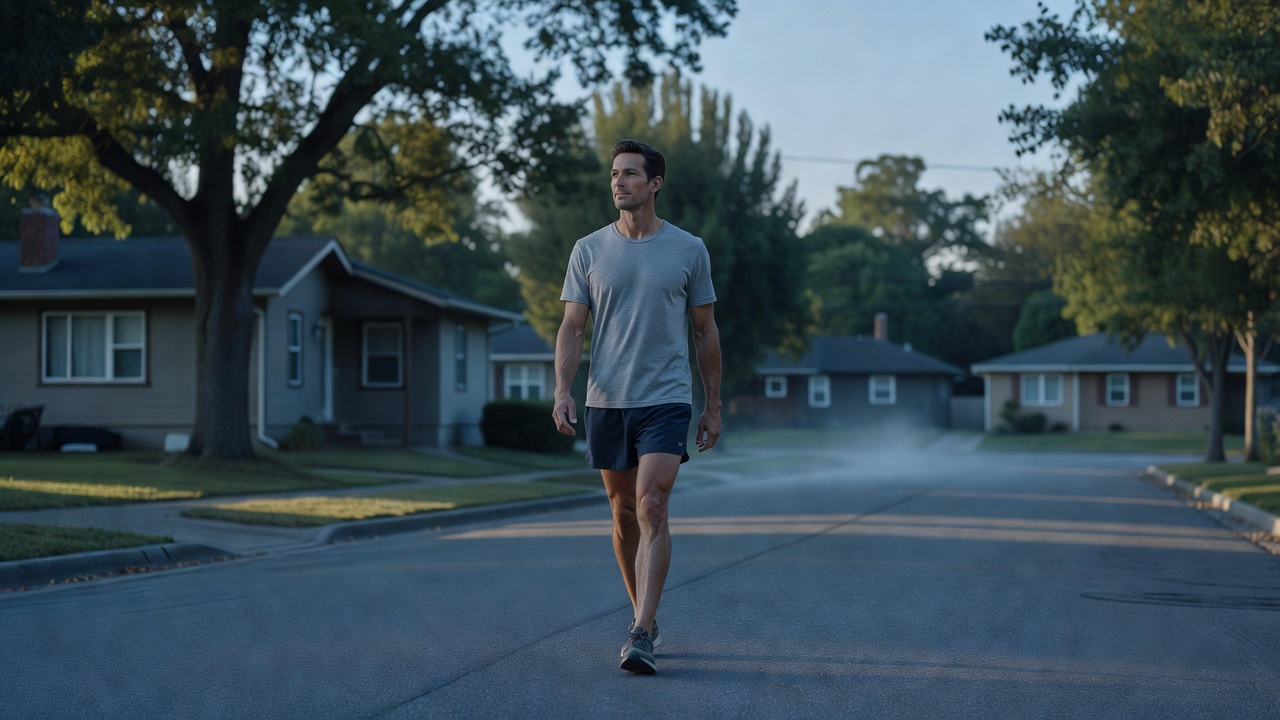
X this week is split between men still treating 4–6 hour nights as discipline and the accounts repeating that one week of five-hour sleep drops testosterone 10–15% with no program, stack, or extra session able to outrun it. The default this article argues is simple: protect 7.5–8.5 hours in a fixed window first. Everything else (training volume, restriction, “optimization”) waits until that is consistent.
Not medical advice
This is a behavioral default from public discourse, not a diagnosis or treatment plan. Sleep problems, snoring, or persistent fatigue need a clinician, not a thread.
What X is actually arguing
The loud fight is grind-as-virtue versus sleep-as-the-actual-work. Fitness, men’s health, and sexual-health accounts are all hitting the same points: most daily testosterone production happens in deep sleep, growth hormone surges in slow-wave sleep, cortisol is supposed to reset overnight, and the brain’s waste-clearance system only runs properly when you are actually out. Skip the window and you get lower T, higher cortisol, stalled repair, worse erections, and cognitive debt the next day.[1]
A University of Chicago study on healthy young men keeps getting quoted: restrict sleep to five hours for one week and daytime testosterone falls 10–15%. That is described as the equivalent of aging T by 10–15 years. Over-40 men running the same 5–6 hour script are told they are not undertrained or undereating — they are undersleeping, and it undoes the rest.[2]
The opposing camp still posts 4-hour nights as a flex. The counter is blunt: that is slow suicide, not an edge. Checklists this week start with sleep, then stress, then food, lifting, alcohol, and body fat. Peptides, extra volume, and restriction get called out as expensive ways to ignore the free lever. Sleep is framed as the original anabolic and the original hormone therapy. No supplement replaces the 10pm–6am architecture.[3]
A secondary thread is sequence. Men over 40 who attack fat or add more gym on broken sleep and high evening cortisol see the body fight back. Sleep, energy, and drive first; composition follows when the system is no longer treating restriction as extra stress. Rest is not weakness. The session creates the stimulus. Sleep delivers the adaptation.[4]
Why this lands after 40
After 40 the production window is already narrower. Baseline testosterone is trending down, slow-wave sleep often fragments, recovery from the same session takes longer, and work-plus-family load keeps evening cortisol higher. Five-hour nights that a 25-year-old might temporarily survive now compound: lower T, worse T/cortisol ratio, poorer muscle and joint repair, more visceral fat holding, worse insulin handling, and slower decision-making the next day.
Growth hormone and tissue repair are heavily loaded on the deep-sleep hours you are cutting. High nighttime cortisol specifically blocks slow-wave sleep, so the stress that kept you scrolling also blocks the recovery you needed. The glymphatic cleanup does not happen on 5.5 hours. You show up to work, training, and family already in debt.
Sexual function tracks the same window. Accounts this week tie morning erections, libido, and blood flow directly to 7–8+ hours of actual sleep, not to another supplement. After 40 the margin for “I’ll sleep when I’m dead” is gone. You cannot out-discipline a sleep-deprived endocrine system or a brain that did not clear overnight.
Alcohol, late screens, inconsistent weekends, and undiagnosed snoring/apnea are more common and more costly here. The body reads extra training or aggressive restriction on top of that as more threat, not more progress.
The default, in enough detail to actually do it
Protect an 8-hour block in bed, same sleep and wake time every day including weekends. Default target: 7.5–8.5 hours of actual sleep. Pick the window that fits your life and lock it. Example that works for a lot of men: lights out 10:00–10:15 pm, up 6:00–6:15 am. If your job forces 5:30 am, move bedtime to 9:30 pm. Do not negotiate it nightly.
Room: completely dark (blackout or mask), cool (60–67°F / 15–19°C is the range circulating), quiet. Body temperature needs to drop to initiate and stay in deep sleep. No TV, no charging phones on the nightstand.
Wind-down, 90 minutes before lights out: no screens, no work email, no bright overheads. Dim lights. Last caffeine by 2 pm. Last alcohol never, or at minimum none within 3 hours of bed — it fragments REM even if it knocks you out. Last large meal 3 hours prior; keep dinner protein-forward and not a gut-bomb. Many men add a short walk or light stretch in that 90-minute window instead of the couch.
If you currently run 5–6 hours, do not jump to 9. Add 30–45 minutes for three nights, then another 30. The win is consistency, not a heroic Saturday lie-in that wrecks Sunday.
Training: if an evening session or extra volume regularly pushes bedtime past the window, cut the session or move it. Four quality sessions on 8 hours beat five sessions on 6. Walking and joints work still happen; the heavy compounds need the recovery night.
Alcohol: zero on training nights and work nights this month. It is the fastest way to destroy the architecture you are trying to rebuild.
Snoring, gasping, or waking exhausted: that is not “I just need more discipline.” Get it checked. Mouth-taping and nasal breathing show up in the threads as a simple add-on once the room and timing are fixed; they are not a substitute for ruling out apnea.
Track nothing fancy the first week. Morning energy, mood at 10 am, and whether you wake before the alarm are enough. If those improve, the rest of the stack (food, lifting, walking) starts working instead of fighting you.
This is the whole default: fixed 8-hour window, dark cool room, 90-minute no-screen wind-down, no alcohol in the evening, caffeine cutoff, and training that does not steal the night. Do that for 14 days before you add anything else.
What people get wrong
They treat 4–6 hours as a personality trait or a badge. It is not. It is a 10–15% T haircut every week they keep it up.
They buy the next peptide, TRT consult, or fat-loss protocol while still scrolling until 1:30 am. Sleep is the original anabolic; the expensive stuff does not replace the window.
They use alcohol or melatonin as a sleep switch. Alcohol wrecks REM. Melatonin can drop you fast then dump you later. Environment and timing first.
They keep the phone in bed and call 90 minutes of blue light “winding down.” Cortisol stays high, slow-wave sleep stays blocked.
They attack calories or add a fifth workout on a sleep-deprived, high-cortisol system and wonder why the scale and the joints stall. Sequence is sleep and energy first.
They let weekends drift two hours. The circadian hit lands harder after 40 than the extra Saturday sleep feels like it helps.
This week
- Write your 8-hour sleep/wake times on a card and put it on the fridge. Same times all seven nights.
- Phone charger leaves the bedroom tonight. Screens off 90 minutes before the written bedtime.
- Make the room dark and drop the thermostat into the 60–67°F range. Test it for three nights.
- Zero alcohol Sunday through Thursday. Notice the difference in how you wake.
- If you snore or wake unrefreshed, book the conversation with a clinician instead of adding another supplement.
- Do not add training volume or cut calories until the window has been hit five nights in a row.
Read next
Back to Trending on X.