Protein at every meal
Archived — August 30, 2026
Snapshot of Trending on X that day. Current · All snapshots
Updated August 30, 2026. Trending in Nutrition on X.
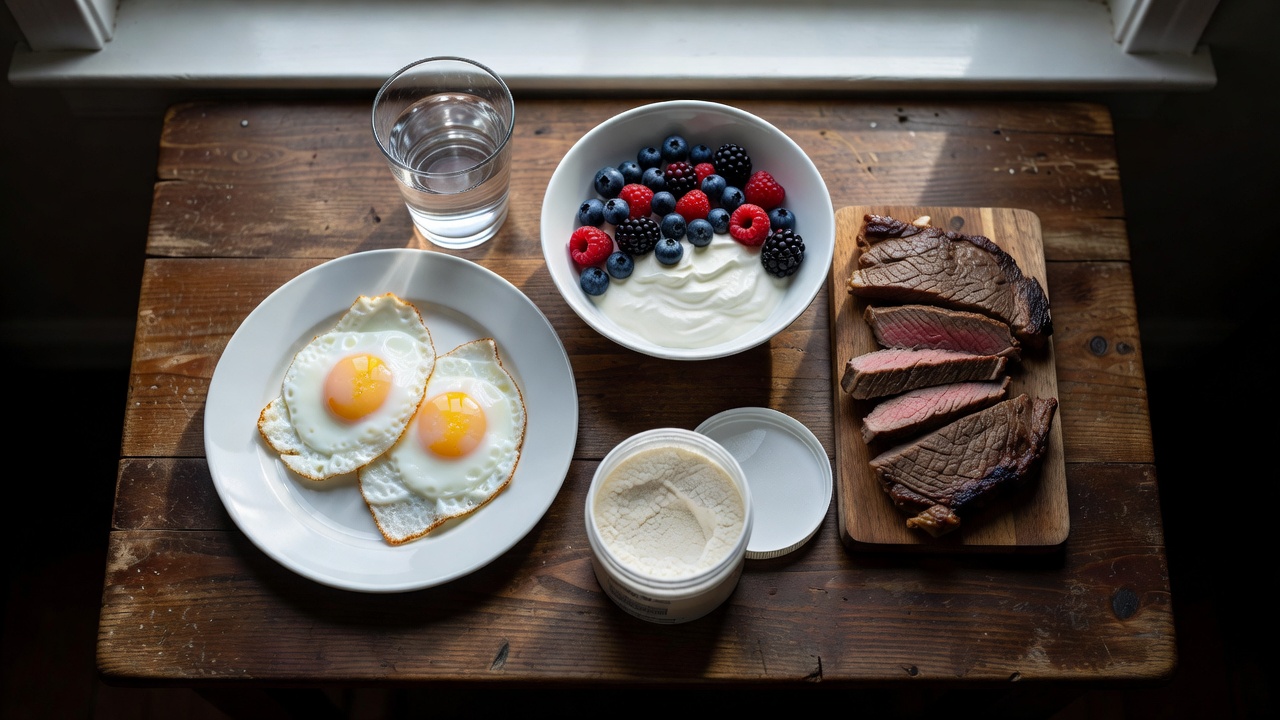
This week on X the fight for men over 40 is not whether protein matters but whether 10 grams at breakfast and 60 at dinner still works. Anabolic resistance means that pattern leaves muscle unrepaired. The default is 30-40 grams of complete protein in every meal, starting at breakfast.
Not medical advice
This is a practical eating default for healthy men, not a clinic protocol. Kidney issues or other conditions need a doctor’s sign-off before you change intake.
What X is actually arguing
The split is daily total versus per-meal dose. One camp still treats protein like a 24-hour bucket: hit 160-200 grams somehow and dinner can carry the load. The louder camp this week says that bucket leaks after 40. Older muscle needs a bigger hit at each sitting to turn on muscle protein synthesis, and most men are still eating like they are 25.[1]
Typical pattern called out: toast or cereal plus coffee (under 10 grams), a sandwich at lunch (around 20), then half the day’s protein dumped at dinner. Same total protein spread across three meals beat the skewed version by about 25 percent in 24-hour muscle-building signal in one trial. The even-spread data is not huge, but the real-world posts keep repeating it.[1]
Coaches posting grocery lists and 10-minute meals are pushing 40-50 grams per plate, 1 gram per pound of goal bodyweight, three or four times a day. Chicken, 93/7 beef, eggs, Greek yogurt, cottage cheese, tuna pouches, whey if you need it. The claim is it kills hunger, protects muscle in a deficit, and makes the rest of the diet easier. Protein first, then whatever else fits.[2]
The tension is practical, not theoretical. Some still say “just hit the daily number.” Others, including men posting their own cuts, say you have never actually hit 40 grams at breakfast consistently and that is why the hunger and the muscle loss keep winning. A minority flags frothy urine or kidney load if you slam 60-plus grams in one sitting every day; the main thread treats 30-40 grams as the floor that most men over 40 never reach. Training is the other half of the argument: protein without lifting did nothing for muscle in older men in one six-month trial. Both, not either.[1]
Why this lands after 40
Muscle after 40 does not listen to the same protein dose it used to. Anabolic resistance is the blunt term: the same 20-gram meal that flipped the switch at 25 now under-delivers. Older muscle needs roughly two-thirds more protein in the same sitting to get a comparable synthesis response. That is why 25-40 grams of high-quality protein (enough leucine) per meal became the repeated number.[1]
You also start the day in a hole. Overnight fast plus a 10-gram breakfast means you spend the first six hours of the day without a real amino-acid signal. Recovery from training, daily steps, and just staying even against sarcopenia all suffer. Hunger follows because protein is the most filling macronutrient per calorie; low-protein mornings are why men over 40 report grazing by 10 a.m.
Constraints are real. Appetite drops, digestion slows, workdays are longer, eating out is expensive. You cannot “just eat more chicken” if breakfast is still a meeting and a pastry. The distribution fix is cheaper than another supplement stack: move the protein you already buy to the first two meals. Pair it with two or three strength sessions a week or the extra protein mostly sits there.
The default, in enough detail to actually do it
Floor: 30 grams of complete protein at breakfast, lunch, and dinner. For most men 80-95 kg that puts daily intake in the 140-180 gram range without chasing 200-plus. If you are 90 kg and training, 40 grams per meal is the working number. Count the protein you can see on the plate, not the sauce.
Breakfast (within an hour of waking, before the coffee becomes the meal):
- Three large eggs (18 g) plus 200 g plain Greek yogurt (20 g) = 38 g. Add fruit or toast if you want carbs.
- 250 g cottage cheese (28 g) plus one scoop whey in water or milk (25 g) = 53 g. No cooking.
- 170 g 93/7 ground beef scrambled with two eggs in a low-carb tortilla, hot sauce. That is the 60-plus gram burrito that keeps showing up in the meal-prep posts.
Lunch (four to five hours later):
- 180-200 g cooked chicken breast (50-55 g) over rice or greens, salsa. Prep Sunday, eat Tuesday.
- Two pouches tuna plus 200 g cottage cheese (around 60 g). Desk lunch that does not require a microwave.
- 170 g lean beef or leftover steak with a potato or beans.
Dinner: 200 g fish, steak, or more chicken. You will already be close to the daily total; do not save 80 grams for this meal.
If you need a fourth feeding, 150-200 g Greek yogurt or a Fairlife-style shake (30-42 g) between lunch and dinner. Snacks under 15 grams of protein count as treats, not protein.
Grocery default that repeats every week: 5 lb 93/7 beef, 3 lb chicken breast, two dozen eggs, four tubs cottage cheese, Greek yogurt quarts, tuna pouches, one tub whey. Same cart. Meals take under 10 minutes once the protein is cooked or portioned. If a meal takes longer than that on a Tuesday night you will skip it.
Eating out: order the extra chicken or the 8 oz steak, skip the bread basket first, add a side of cottage or eggs if they have them. Travel: the pouches and the yogurt cups survive a day bag.
Track for a week with a notes app: protein grams at each of the three meals. Do not obsess over the daily total until the per-meal floor is automatic.
What people get wrong
They treat breakfast as optional. Toast, cereal, or just coffee leaves 10 grams on the table and the rest of the day chasing hunger.
They dump 70-80 grams at dinner and call the daily number “hit.” Per-meal synthesis saturates; the extra does not make up for the empty morning.
They count a 20-gram sandwich or a protein bar as “a protein meal.” After 40 that dose is the old 25-year-old number.
They raise protein and skip the weights. Protein alone added no muscle or strength in older men without training.
They chase 60-plus grams every sitting because “more is better.” 30-40 grams of real food three times a day is the part almost nobody does; the extra is mostly extra calories and extra bathroom time.
They buy expensive shakes and still eat cereal at 7 a.m. Food first, powder only to close a gap.
This week
- Write down the protein grams in your last three breakfasts. Most men are shocked.
- Tomorrow morning put 30-plus grams on the plate before anything else: eggs plus yogurt or the cottage-plus-whey combo.
- Buy the repeat grocery list once: eggs, chicken or beef, cottage or Greek, tuna.
- Hit 30 grams at lunch and dinner as well for the next five days. Log it.
- Do one full-body or upper/lower strength session. Protein without the stimulus is just expensive food.
- Note hunger at 10 a.m. and 4 p.m. The point of the distribution is that those windows get quieter.
Read next
Back to Trending on X.