Sleep is the work
Archived — September 2, 2026
Snapshot of Trending on X that day. Current · All snapshots
Updated September 2, 2026. Trending in Health on X.
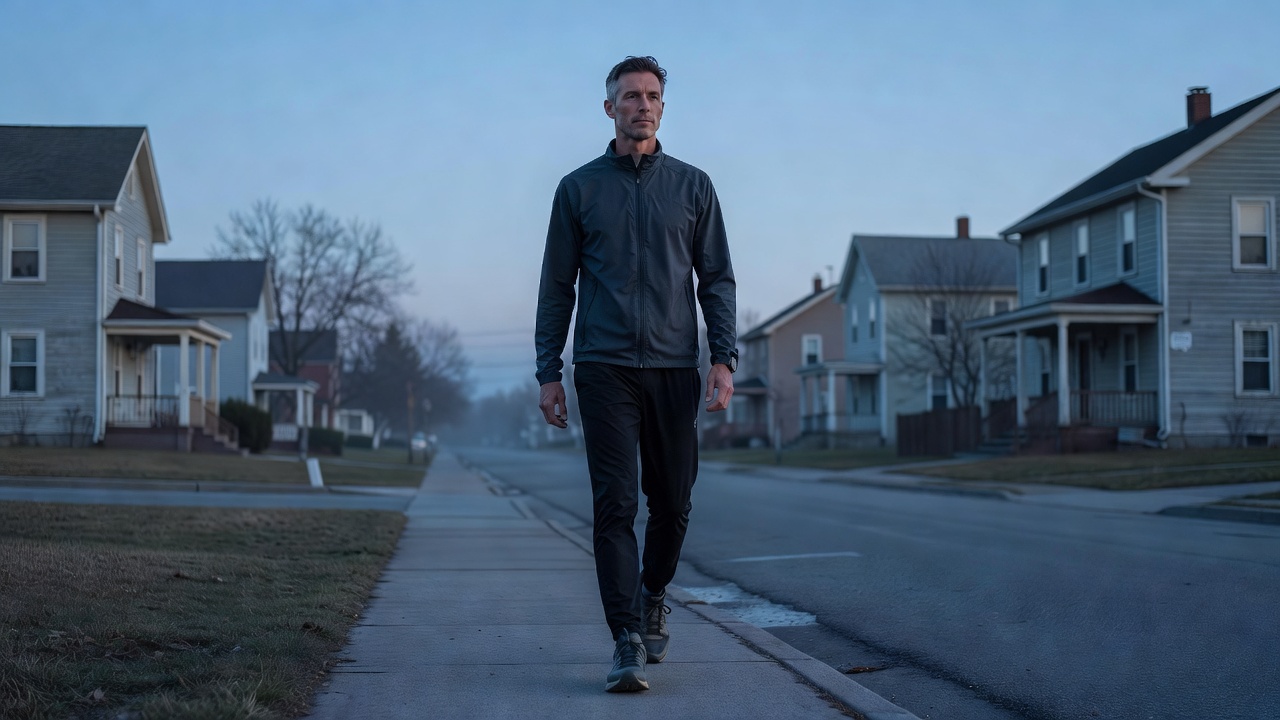
This week on X the fight is not “is sleep good.” It is whether a 4–5 hour night still counts as discipline. One camp treats late nights as edge. The other treats sleep as the session that actually pays — hormones, tissue, judgment. The default here is the second camp: after 40, protect 7.5–8.5 hours on a fixed clock, or the gym, the diet, and the “grind” are just expensive noise.
Not medical advice
This is a schedule and environment default, not a diagnosis or a treatment plan. If you snore, gasp, stop breathing, or still feel wrecked after a full night in bed, that is a clinician conversation, not a new wearable.
What X is actually arguing
The loud split is simple. Hustle accounts still frame sleeping in as a character flaw — every late morning as training yourself to accept mediocrity. Recovery accounts answer that most men are wrecking testosterone, stalling repair, and stacking cognitive debt, then calling it work ethic. The phrase that keeps repeating is that sleep is not what happens after the real work. Sleep is the work.[1]
The mechanism posts are almost copy-paste this week. A large share of daily testosterone is produced in deep sleep. One week of restriction to about 5 hours cut daytime testosterone 10–15% in healthy young men. Growth hormone surges in slow-wave sleep. Cortisol is supposed to reset overnight; chronic short sleep keeps it high and wrecks the T-to-cortisol ratio that drives both training and decisions. Skip the night and you broke tissue with nowhere to rebuild.[2]
The status argument flipped in public. Bryan Johnson’s cafe mix-up — fully caffeinated coffee instead of decaf — wrecked a night, dropped restorative sleep, and he cancelled dunk training because acute sleep disruption can raise injury risk 70–130%. The same account said high-quality sleep has replaced sleeping under the desk as a high-status symbol. That is the new flex: not “I only need five,” but “I protect the night.”[3]
Coaches aimed at busy men keep saying the gym is the easy part. Eight hours, clean food, phone off — that is where most men fall off. Fat-loss threads added the compounding: poor sleep raises hunger, wrecks food choices, drops NEAT, and makes the deficit harder to hold. Perfect macros on 5 hours is a stall with extra steps.[4]
A smaller camp is selling gadgets and scores: trackers, “micro-arousals,” AI sleep coaches. Useful if it changes tomorrow night. Useless if it becomes another dashboard you ignore at 12:40 a.m. The practical posts this week were not apps. They were alcohol cuts, caffeine cuts, and treating sleep as part of training load.
The tension to name: leftover time versus programmed work. If sleep is leftover, work, training, screens, and drinks always win. If sleep is the work, those things get a cutoff.
Why this lands after 40
After 40 the basics still work. The margin does not. Recovery from the same session takes longer. Sleep debt that a 25-year-old shrugged off now shows up as worse pumps, worse mood, worse morning wood, and a session that feels heavier than the logbook says. A midlife training program that treats sleep, load, and the next session as footnotes will grind you down.[5]
Testosterone is already on a slow decline for most men in this decade. Sleep restriction is a direct suppressor independent of how clean the diet looks. You do not need a perfect lab story to see the pattern: short nights, higher cortisol, worse insulin handling, more hunger, worse training quality. Restriction to ~5 hours for a week reduced insulin sensitivity in healthy men. Six-hour nights are not a free metabolic pass. That is why the scale and the waist stall when the calendar is “on plan” and the nights are not.[6]
Injury risk is the part hustle culture skips. Acute disruption makes you clumsy, slower to react, and more likely to yank a tendon that used to forgive you. Cancelling a hard session after a wrecked night is not softness. It is load management. Adding extra cardio because you “feel lazy” is usually a sleep problem wearing a work-ethic costume.[7]
Alcohol and late caffeine hit harder now. The drink that used to knock you out fragments REM. The 4 p.m. coffee that used to be fine still sits in the system at 11. Pre-workout at 400 mg does not fix a 5-hour night. It borrows from tonight to pay for this afternoon. After 40 that loan has interest.
Weight, neck size, and alcohol also raise the odds of snoring and apnea. Eight hours in bed with 40 unconscious panic meetings is not recovery. Do not solve that with mouth tape as a personality. Get it checked.
The default, in enough detail to actually do it
Pick a sleep window and treat it like a meeting you do not move. Target 7.5–8.5 hours in bed, same start and same wake, seven days. Example that fits a 6:15 alarm: lights out 10:15. Example that fits a 6:30 alarm: lights out 10:30. Weekend drift: 30–45 minutes, not 2 hours. Social jet lag on Sunday night is how Monday training dies.
Wind-down starts 90 minutes before lights out. Kitchen closed. Screens dim or gone. Phone charges in another room. If you need an alarm, use a cheap clock. Scrolling in bed is not “unwinding.” It is light, novelty, and cortisol in a pocket.
Caffeine cutoff: 1:00 p.m. for most men over 40. If you sleep light, make it noon. No high-stim pre-workout on short sleep. Water, a real warm-up, and a lighter session beat a 400 mg mask. If you need that much stimulant to lift, the night failed, not the program.[8]
Alcohol: none within 3 hours of bed. Default on training nights is none. It makes you sleepy and then wrecks REM architecture. Men who cut it for two weeks keep reporting sleep, mood, and energy moving together. That is not a purity contest. It is architecture.[9]
Last real meal 3–4 hours before bed. Protein at dinner — meat, eggs, Greek yogurt, fish — so you are not waking ravenous at 3 a.m. Do not go to bed stuffed. Do not go to bed on a 9 p.m. “I’ll just have a drink and chips” snack. Stop fluids 90 minutes out if you are up peeing. That is often timing, not a broken bladder.
Room: dark, cool, quiet. Aim near 65–67°F (18–19°C). Blackout the streetlight. If a partner needs a lamp, they get a book light, not a ceiling. Body temperature has to drop to get into deep sleep. A hot bedroom is not a character test.
If you are not asleep in about 20 minutes, get up. Dim light. No phone. Sit. Back to bed when sleepy. Lying there negotiating with tomorrow is how insomnia becomes a habit.
Morning: light in the eyes within 15–30 minutes of the alarm. Outside is better. Ten minutes of walking counts. That sets the clock for tonight. Do not “catch up” with a 9 a.m. snooze that slides the whole day.
Training rule for a wrecked night (under ~6 hours, or you feel drunk-tired): drop intensity. Walk, mobility, technique, or skip. Do not add volume to punish yourself. Do not chase PRs. The session created the stimulus. Sleep delivers the adaptation. Without the night, you are just breaking things.
Do not manage this with a sleep score as the goal. For 7 days, write two numbers: lights-out time and wake time. If those two are stable, you are doing the work. If they swing 90 minutes, the stack, the macros, and the new program are downstream of a clock you will not set.
What people get wrong
-
Calling 4–5 hours discipline. That is not an edge. It is a hormone cut and a worse brain, then a story about grit.[10]
-
Adding cardio or slashing calories because you feel flat. Look at the night first. Tired is not always “lazy,” and it is not always a deficit problem.
-
Using alcohol as a sleep aid. You sedate, then you fragment. REM pays the bill.
-
Using late caffeine or high-stim pre-workout to paper over recovery debt. You are robbing tonight to pay for 5 p.m.
-
Weekend catch-up as a strategy. Two extra hours Saturday and a 1 a.m. Sunday does not repay the week. It delays Monday.
-
Chasing a perfect wearable score while the phone is in the bed. Consistency of the window beats a 94 that you earned once.
-
Treating sleep as leftover after work, training, and a show. Leftover always loses. Put the night on the calendar first, then fit the show.
This week
-
Write your window on paper: lights out and alarm, 7 days, same times. Drift cap 45 minutes.
-
Set a caffeine deadline today (noon or 1 p.m.) and keep it even if training feels dull.
-
Charge the phone outside the bedroom starting tonight. Alarm clock, not a feed.
-
No alcohol within 3 hours of bed. If you train tomorrow, skip it.
-
If any night lands under 6 hours, cut the next session to a walk or technique. Do not “make it up.”
-
Morning light within 30 minutes of waking, 10 minutes outside if you can. That is tonight’s setup, not a wellness hobby.
Read next
Back to Trending on X.