Protein at 1 g per pound, drop the drinks
Archived — September 4, 2026
Snapshot of Trending on X that day. Current · All snapshots
Updated September 4, 2026. Trending in Nutrition on X.
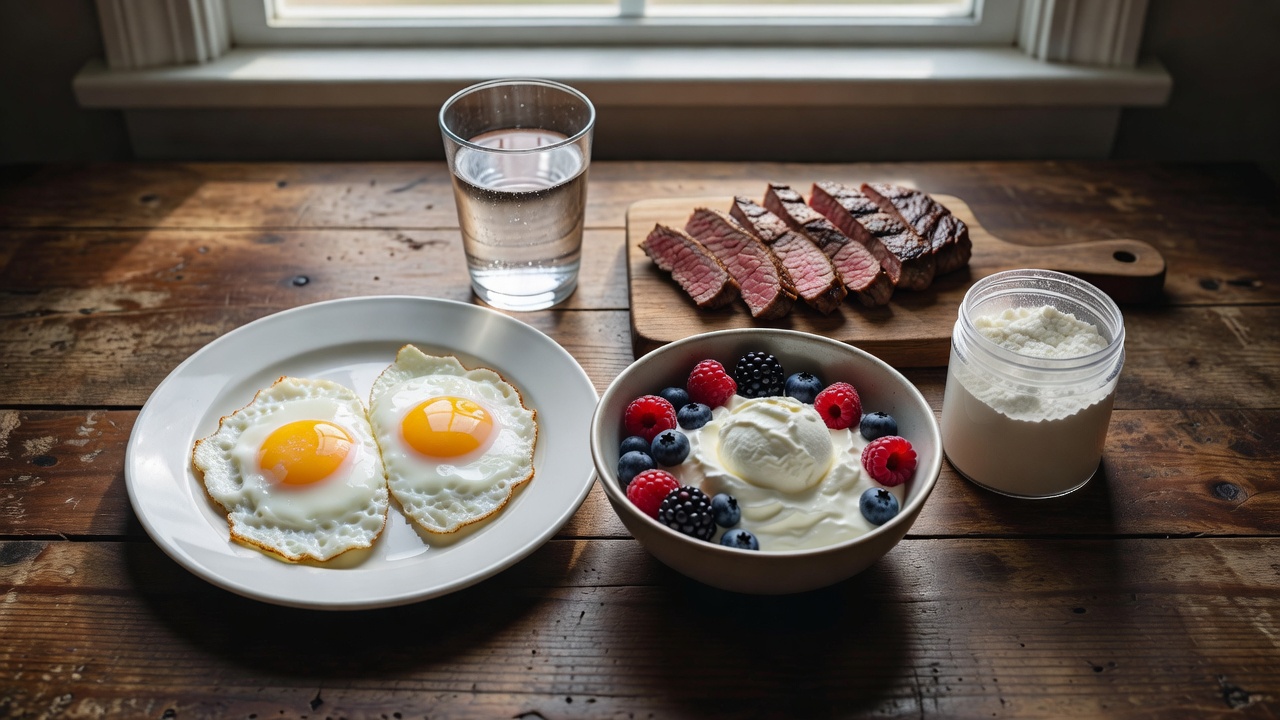
This week’s nutrition fight on X is not a new diet. It is two numbers colliding with a habit men over 40 still treat as optional: hit about a gram of protein per pound, and stop drinking like the weekend is a free zone. The science-clip camp says the gram-per-pound rule is too high. The coach camp repeats the same stack anyway because it is easy to remember and it stops the two leaks that keep the waist stuck — under-eating protein and pouring calories into glasses. This article argues that default: 1 g per pound of goal bodyweight, protein at every meal, drinks at zero until the scale and sleep actually move.
Not medical advice
Food, protein targets, and alcohol are not a diagnosis or a treatment plan. If you have kidney disease, a drinking problem, or a condition that changes what you can eat, that is a doctor conversation, not a thread.
What X is actually arguing
The loudest line this week is still the round number: 1 gram of protein per pound, usually of goal bodyweight if you are carrying extra fat, not of the number on the scale today. Coaches are pairing it with a calorie range of goal weight times 11 to 12, steps, lifting, and a hard no on alcohol. One widely saved version this week was exactly that stack: protein at 1 g per pound of goal weight, water, creatine, 45 minutes of lifting, 8,000 steps, no food inside two hours of bed, same sleep time, and 0 alcohol.[1]
The pushback is not quiet. A Huberman Lab clip making the rounds says the common 1 g per pound target may be too high for a lot of people, lands Rhonda Patrick at 1.2–1.6 g per kilogram (roughly 0.55–0.73 g per pound), and notes that eating at the high end can just become extra calories from whole food. The clip’s bottom line is train first and let appetite follow.[2] A researcher thread this week put general health at 1.2–1.6 g/kg and lifting or dieting at 1.6–2.2 g/kg, with benefits often plateauing near 1.6 g/kg for many.[3] Another post went further: just over half a gram per pound covers most people, and a full gram is for lean, serious athletes.[4]
So the protein fight is not “do you need protein.” It is whether the gym-bro round number is a useful default or a calorie surplus in disguise. After 40, the coach side is winning the replies because most men in the comments are not overshooting 180 g. They are still eating 50–80 g and calling it a high-protein day.
The drinks fight is simpler and meaner. One camp says stop. Not “by Friday.” Not “just one night.” Stop, run 90 days, watch sleep and the midsection.[5] The other camp pretends weekends do not count. The counter this week was blunt: you say Friday and Saturday only, then those nights become pizza and late snacks, and the lower gut, face, and scale stall. Cap it at one or two drinks a week, or drop it for a stretch.[6] Transformation threads put beer first on the stop list — bloat, extra calories, worse fat loss — and put under-eating protein right beside it.[7]
Name the tension: optimization versus two rules you can run on a Tuesday. One side wants the precise gram per kilogram. The other side wants a number you can hit without a spreadsheet, plus the removal of the liquid calories and the sleep tax that make the spreadsheet irrelevant.
Why this lands after 40
Muscle is no longer on autopilot. After 40, untrained mass drifts down year after year. A midlife nutrition post this week put the scare number at about 1% muscle loss per year if you sit at ~50 g of protein and wonder why walks hurt and 3 p.m. sugar hits. The fix they pushed was not a superfood. It was at least 30 g of real protein per meal.[8] Men-over-40 threads said the same thing without the infographic: a lot of guys are under-eating protein, then acting shocked that hunger is constant and muscle is harder to keep.[9]
The muscle-building switch also wants a bigger trigger. One post this week framed it as anabolic resistance: the leucine threshold that turns protein into a “build” signal is higher than it was at 25. Small protein snacks do not clear it. A real serving of meat, eggs, dairy, or a proper shake does. Less muscle then slows the burn, and fat becomes easier to hold.[10] That is why “protein at every meal” is not bodybuilder folklore after 40. It is how you keep the signal on when the volume of food is going down.
Alcohol hits that same system from the other side. It is burned first, so fat loss pauses. Four drinks is roughly 600 calories that never get logged, three nights a week is 1,800 calories your app never sees, and the next-day food is worse because sleep is worse.[11] After 40 you already recover slower. A late Friday pour does not cost Saturday morning. It costs Saturday training quality, Sunday hunger, and Monday’s waist. The nightly glass that “did nothing at 35” is now a sleep tax. Cut it or save it for rare occasions.
The constraint is time and appetite, not theory. You will not meal-prep seven cuisines. You will either put 40–50 g of protein on the plate three or four times, or you will graze and drink. After 40, grazing and drinking is how men stay the same weight for five years and call it metabolism.
The default, in enough detail to actually do it
Set two numbers and stop negotiating them for 90 days.
Protein: 1 gram per pound of goal bodyweight. Want to be 180 lb? That is 180 g. Want to be 200? 200 g. If you are already lean and lifting hard, use current bodyweight. If you are 240 and chasing 200, do not try to force 240 g; use 200 and spend the rest of the calories on food you will actually eat. Hit it 6 days out of 7. That is the rule this week’s practical threads keep repeating.[12]
Calories, if fat loss is the job: goal bodyweight × 11 to 12. A 180 lb target is about 1,980–2,160 calories with 180 g of protein. Hit protein and calories before you talk carbs, fasting, or powders.[13]
Drinks: zero. Not “clear liquor on Saturday.” Zero for this week, then keep the streak to 90 days. The 90-day test making the rounds is sleep deeper by week one, water weight down by week two, belly starting to move by day 30. Treat that as a n=1, not a promise — but run the test instead of arguing with it.[14]
Distribute the protein so each eating event actually counts. Aim 40–50 g per meal, three meals plus one backup shake. Roughly a gram per pound at 180–200 g is 40–50 g four times, not 20 g sprinkled on salads. Chicken, lean beef, eggs, Greek yogurt. That pattern is what people report makes a deficit feel survivable.[15]
A day that hits ~180 g without a personality transplant:
- Breakfast (45–55 g): 4 whole eggs scrambled with a cup of egg whites, or 4 eggs plus 200 g Greek yogurt. Salt, hot sauce, fruit or toast if the calories allow.
- Lunch (45–55 g): 6–8 oz cooked chicken breast or 93/7 beef, potatoes or rice, a pile of vegetables. If you eat out, order the grilled chicken or fish and eat the protein first.
- Afternoon (30–40 g): 1–2 scoops whey in water, or 1 cup cottage cheese, or a tuna packet. This is the meal most men skip, which is why they miss 180 g.
- Dinner (45–55 g): 8 oz sirloin, salmon, turkey, or shrimp. Vegetables. Carbs around training, not around the TV.
A 50 g cheat sheet from this week is useful because people cannot eyeball ounces: 2 scoops whey, 2 cups egg whites, 8 oz 93/7 beef, 6 oz chicken breast, 2 cups Greek yogurt, 2 cups cottage cheese, 8 oz sirloin, 8 oz turkey, 2 cans tuna, 8 oz salmon. Pick two or three per day and stop hunting exotic protein.[16]
Anchor every meal to one item: eggs, chicken, lean beef, white fish, Greek yogurt, cottage cheese. Three meals plus one shake and 180 g happens without a tracker after a week of weighing. If you are aiming 180 lb, that is the gram-per-pound number. Heavier goal, add some. Lighter, take some off.[17]
How to drop the drinks without a speech. Remove beer from the house. At dinner, drink sparkling water in a glass you would have used for wine. At a work event, club soda, lime, hold the glass. If you cannot stop at one, you do not take one. That line showed up next to the protein-snack lists for a reason: alcohol makes the rest of the plan twice as hard — sleep, cortisol, and a fat-loss pause that lasts into the next day.[18]
Eating out, travel, payday. One sit-down meal a week if you need the social slot. Not every lunch. Pack the protein. Deli rotisserie chicken, tuna, Greek yogurt, a 40 g bottled shake if that is what the airport has. Do not “save calories” for drinks. There is nothing to save. The protein still has to hit.
What “done” looks like in seven days. Six of seven days at or near the gram number. Zero drinks. First meal contains a real protein source, not a pastry and coffee. Hunger gets quieter. Sleep gets less broken. The scale may drop water first. That is the drinks leaving, not a miracle.
What people get wrong
-
Eating 50 g of protein all day and calling it high protein. That is one meal. After 40 it is a slow leak of muscle and a 3 p.m. crash, not a diet.[8]
-
Using current bodyweight when you are 40+ lb overweight. 1 g per pound of 250 lb is a food bill and a calorie surplus. Use goal weight. The threads saying “goal, not current” are the ones that match real kitchens.[12]
-
“I only drink on weekends.” Those nights become extra food. Four drinks hide hundreds of calories and pause fat burning. The scale does not care that it was social.[6]
-
Treating 1 g per pound as either sacred science or a joke. It is a default that overshoots the minimum so busy men actually land in the useful range. The kilogram papers are not wrong. Most men over 40 are not hitting 1.6 g/kg either.
-
Logging chicken and not logging beer. Liquid calories and the pizza after them are why “I eat clean” still stalls. If it is not in the log, it still hits the waist.
-
Waiting for a perfect meal plan before the first 40 g breakfast. Start with eggs or yogurt tomorrow. Build the other meals after the first one exists. Winging the gym and winging protein are the same failure mode: no default, so the old pattern wins.[7]
This week
- Write the protein number on a note in the kitchen: goal bodyweight in pounds = grams per day. That is the only target for seven days.
- Weigh protein at three meals for three days so “6 oz chicken” becomes a picture in your head, not a guess.
- Put a 40 g protein source in breakfast every day this week. Eggs, yogurt, leftover meat. Coffee is not breakfast.
- Log every drink for seven days with no edits. If the honest number is more than two, the default is zero, not “cut back.”
- Run seven consecutive days at 0 alcohol. Replace the glass with sparkling water at the same time of day you usually pour.
- Shop once: eggs, chicken or 93/7 beef, Greek yogurt or cottage cheese, tuna, one whey tub. If it is not in the house, you will not hit 180 g on Thursday night.
Read next
Back to Trending on X.