Protein first
Archived — September 5, 2026
Snapshot of Trending on X that day. Current · All snapshots
Updated September 5, 2026. Trending in Nutrition on X.
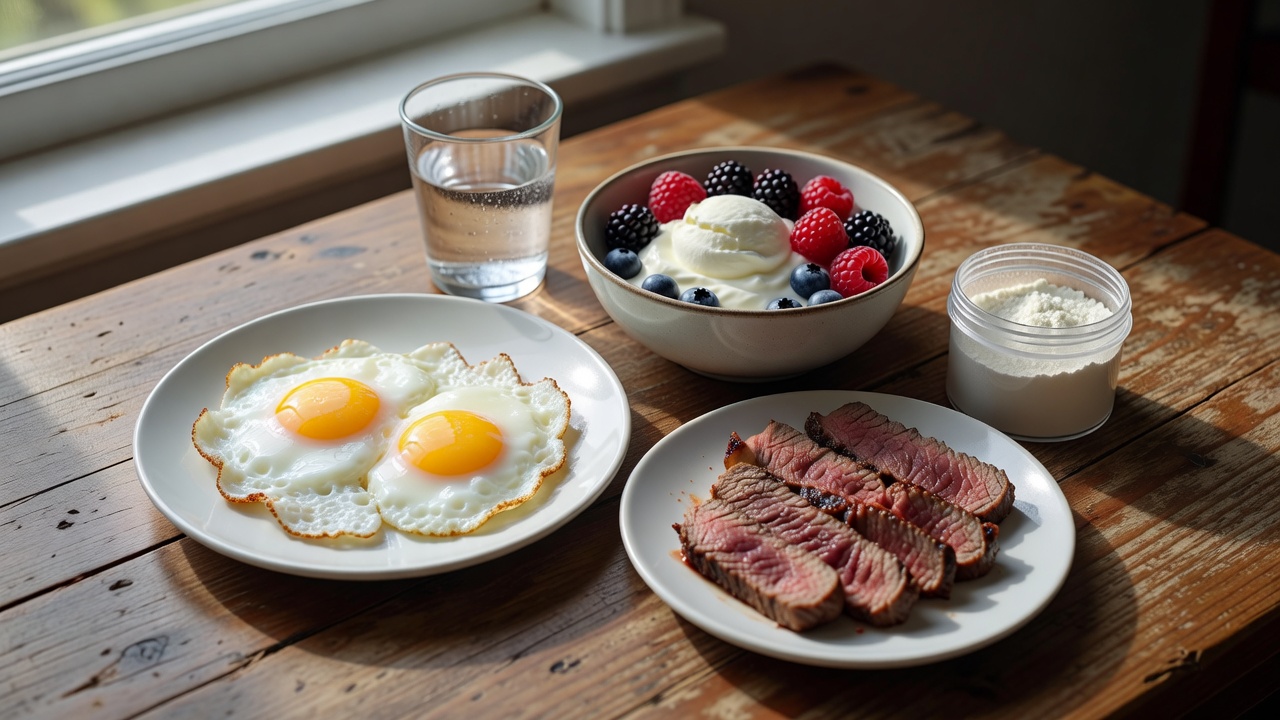
X spent the last seven days hammering the same point at men over 40: you are still treating protein like a side dish while your muscle signal is going deaf. The loud posts are grocery lists, 30-40 g per meal rules, leucine-threshold videos, and a computational model showing older muscle builds 40% less from the same protein. The default this article argues is simple and non-negotiable: put a real protein source on the plate first at every meal, hit 30-40 g, use whole foods, and stop waiting for a better time.
Not medical advice
This is not medical advice and not a clinic protocol. If you have kidney disease, gout, or any condition that changes how you process protein, talk to your doctor before you change anything.
What X is actually arguing
The fight is not plant versus animal this week. It is dose-per-meal versus daily total, whole-food plates versus shakes, and “just start” versus the science of why the old advice stopped working.
One camp posts the operational version. Protein at every single meal, no tracking required. The 1-1-1 plate: one protein (eggs, steak, chicken, ground beef, fish), one carb (rice, potato, oats), one fat or flavour. Cook two proteins and two carbs on Sunday and rotate. Protein keeps you full and holds the muscle while the fat comes off. Grocery lists circulating with 200+ likes look like this: chicken breast or mini fillets, lean ground beef or turkey, salmon or shrimp, eggs and egg whites, Greek yogurt, cottage cheese, optional protein powder. Then rice, potatoes, oats, sourdough, spinach, broccoli, peppers, olive oil, avocado. Sample meals are eggs-spinach-mushrooms with toast, grilled chicken-rice-broccoli, salmon-salad, lean beef-potato-veg. Snacks are yogurt, cottage cheese, hard-boiled eggs.[1]
The other camp posts the mechanism. After 40 the muscle-building switch needs a bigger leucine hit to fire. The same 20 g that worked at 25 now sits below the threshold. Anabolic resistance is real: older adults eating identical protein build 40% less new muscle protein. A computational model this week mapped six simultaneous failures—gut and liver stealing more amino acids, weaker delivery to muscle, blunted insulin signalling, lower mTOR, 43% weaker mTOR response to leucine, lower p70S6K. Fixing one pathway does almost nothing. You need the bigger per-meal dose plus the training stimulus.[2]
A third group sits in the middle: 30-40 g at each main meal as the practical rule, protein first (eat the meat or yogurt before the rice), quality sources that actually deliver the amino acids (eggs, fish, poultry, dairy, thoughtfully combined plants). Timing and distribution matter more than the daily total once you are past 40. Some still include a shake for convenience; most of the loud posts say you do not have to live on them. Whole-food versions using yogurt, eggs, cottage cheese, and leftover meat are what people are actually doing.[3]
The tension is whether you need to weigh and track or just make sure a palm-plus of protein hits the plate three times a day. The winning posts this week are the ones that give a default you can execute on a Tuesday without an app.
Why this lands after 40
Muscle protein synthesis gets stubborn. The leucine trigger that used to fire on a modest serving now needs a larger, faster dose. Your gut and liver extract more of the amino acids before they ever reach muscle. Insulin signalling and mTOR both lose punch. The result is anabolic resistance: same grams of protein, 40% less new muscle built. Over months that compounds into the slower metabolism, easier fat gain, and harder fat loss that every man over 40 notices.[4]
Protein first attacks three problems at once. Satiety: 30-40 g early in the meal blunts the later carb-and-fat graze. Muscle retention: you give the tissue the leucine pulse it now requires instead of spreading 15 g across six snacks that never cross the threshold. Practical calorie control: when protein is on the plate first, modest cuts in the rest of the meal become tolerable instead of leaving you ravenous and flat.
Stomach acid and digestion start to matter more as the decade progresses, but the signalling problem is already present at 40. Resistance training is still the stimulus. Protein is the raw material. Sleep and recovery let the adaptation happen. Skip the per-meal dose and the gym work is mostly wasted. Muscle is not just appearance; it is the organ that keeps you independent, metabolically flexible, and able to recover in your 60s and 70s. The choices you make now set that trajectory.
The default, in enough detail to actually do it
Target 30-40 g of protein at breakfast, lunch, and dinner. That is the non-negotiable. If you weigh 180-200 lb and can hit 1 g per pound of bodyweight (or goal weight) across the whole day, do it; most men will get there by simply hitting the per-meal number plus one snack. Do not start with a spreadsheet. Start with the plate.
Protein first means you eat the protein source before the starch or the bread. You do not have to weigh after the first week once you know what 30-40 g looks like: 5-6 oz cooked chicken or turkey, 6 oz lean beef, a large salmon fillet, 4 whole eggs plus extra whites or a cup of Greek yogurt, a generous serving of cottage cheese, or a combination (omelette plus yogurt). A busy swap that keeps showing up: double-egg omelette plus Greek yogurt, or a protein salad bowl with leftover meat.
Breakfast examples that actually get used: - 3-4 eggs + extra whites, spinach, mushrooms, optional sourdough. - Large Greek yogurt (or two small) with berries; add a scoop only if you are still short. - Cottage cheese bowl or leftover chicken if you train early.
Lunch: - Grilled chicken or turkey, rice or potato, broccoli or mixed salad. - Tuna or salmon salad with olive oil, big portion of greens.
Dinner: - Salmon or shrimp, rice, mixed salad. - Lean ground beef or steak, baked potato, peppers and mushrooms. - Same proteins rotated so you are not eating identical meals every night.
Snacks if needed to hit the daily number: Greek yogurt, cottage cheese, hard-boiled eggs, leftover meat, rice cakes with peanut butter only after the protein is in.
Sunday cook: two proteins (chicken + ground beef or salmon), two carbs (rice + potatoes). Season simply. Reheat. The 1-1-1 formula keeps the rest of the plate honest without macros.
Morning default some posts are pushing: 30 g protein within 30 minutes of waking, then a 30-minute walk. Eggs or yogurt make that easy. It is not magic; it is just getting the first leucine pulse in before the day derails you.
You do not need a shake. If travel or a 14-hour day makes whole food impossible, use one. Otherwise the grocery list above plus a slow cooker or sheet pan covers 90% of weeks. Palms and known portions beat the scale for most men who have failed at tracking before.
Pair it with the lifting you are already doing (or start). Protein without the stimulus is just expensive urine and extra calories. The combination is what breaks the cycle of losing muscle and gaining fat.
What people get wrong
They treat daily total as enough and eat 15 g at breakfast, 20 g at lunch, then 50 g at 9 pm. After 40 those small doses never cross the leucine threshold.
They save protein for dinner and start the day on coffee and toast. Hunger and muscle loss both start before noon.
They live on shakes and wonder why they are still hungry and missing the micronutrients that come with eggs, fish, and yogurt.
They skip the lifting because “I’m eating more protein now.” Protein is the material; training is the signal.
They assume they already eat “enough meat” because they had a steak on Saturday. Most men over 40 are still in the 50-80 g range on a typical weekday.
They wait until they are 50 or 60 “when it really matters.” The signalling is already blunted. The grocery list and the 30-40 g rule work now.
This week
- Tomorrow morning put 30-40 g of protein on the plate first (eggs + yogurt or leftover meat). Eat it before anything else. Repeat at lunch and dinner. No other diet changes.
- Buy the core grocery items: eggs, one lean meat, one fish, Greek yogurt or cottage cheese, rice or potatoes, broccoli or spinach. Cook two proteins on Sunday.
- Use the 1-1-1 plate for every meal for seven days. Photograph it if you need a sanity check.
- If you walk, do 30 minutes after the morning protein. Note hunger at 11 am and 4 pm.
- Keep whatever lifting you already do. Do not add volume yet. Let the protein support the work that is already there.
- At the end of the week, look at energy, fullness, and whether your clothes feel the same. That is the only scoreboard that matters for the next seven days.
Read next
Back to Trending on X.