Protein first, every meal
Archived — September 14, 2026
Snapshot of Trending on X that day. Current · All snapshots
Updated September 14, 2026. Trending in Nutrition on X.
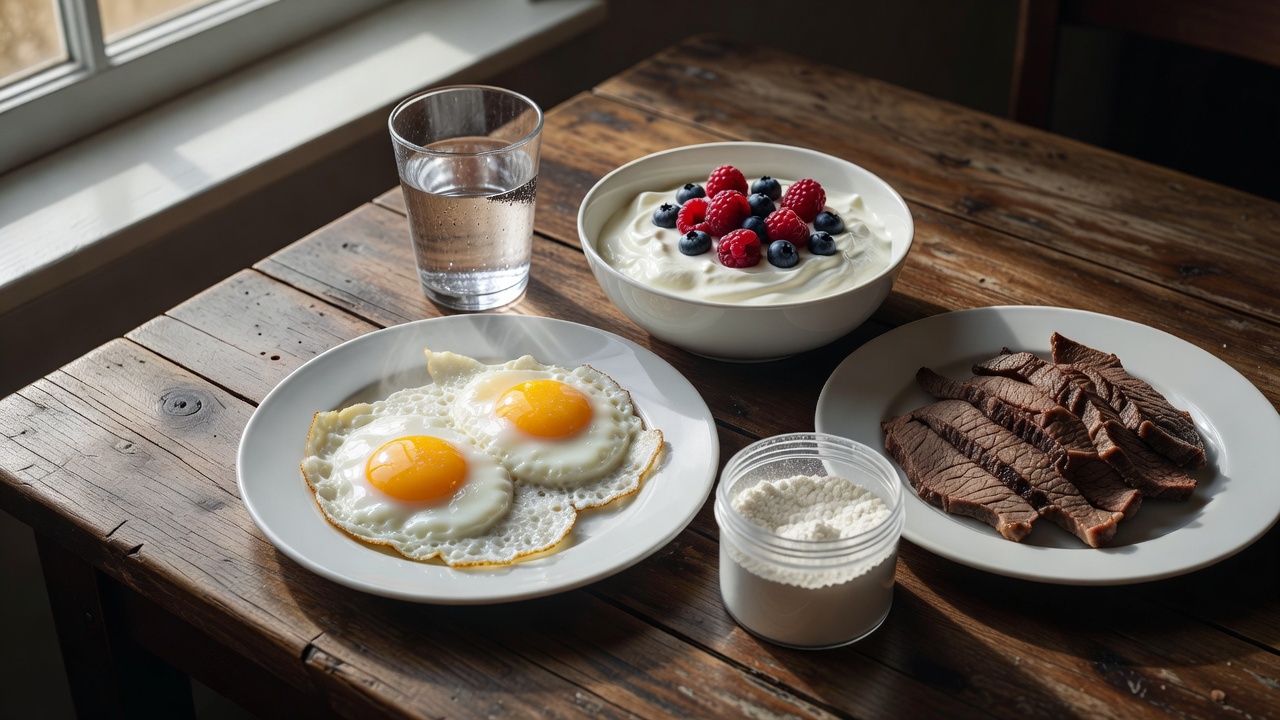
This week’s nutrition fight on X is not keto vs carbs. It is breakfast. Men over 40 are still opening the day with coffee and toast, then dumping most of their protein onto dinner and wondering why the waist grew and the energy died. The loud camp is blunt: put 30–40 g of protein on the plate first, every meal, starting before coffee. That is the default.
Not medical advice
This is a food-order default for training-age men, not a diagnosis or a diet prescription. If you have kidney disease, a clinician-directed protein limit, or a medical eating plan, follow that — not a trending thread.
What X is actually arguing
Two camps are talking past each other. Camp one says total daily protein is the only number that matters, so a 50 g steak at 8 pm “covers it.” Camp two says that after 40 the meal itself has to clear a threshold or the amino acids get wasted on a muted muscle-protein-synthesis signal. The second camp is winning the timeline. Coaches and 40+ accounts are repeating the same range: 25–40 g of high-quality protein at every meal, with daily intake around 1.0–1.6 g per kg, higher if you lift.[1]
Breakfast is the actual battlefield. One thread this week put it in five minutes: 30 g-plus of protein before coffee touches your lips, eggs or Greek yogurt or a shake, prepped the night before so “no time” dies as an excuse.[2] Another went harder: 40–50 g at breakfast, because coffee and toast is why you are hungry at 11 and raiding the cupboard at 9.[3] The plate-order version is the same idea in one sentence — protein first, then fiber-rich vegetables, beans, fruit, or oats.[4]
The other loud claim is distribution. Total still matters. Spreading it does the practical work. Accounts tracking real weeks are building 3–4 eating occasions, not one heroic dinner, and calling that the way you actually hit 140–180 g without living in a shaker bottle.[5] A few men in a cut are posting 180–200 g a day with home-cooked meals. Most of the 40+ feed is not that aggressive. The consensus default is simpler: stop grazing, stop cereal, put a named protein on every plate.
What is not winning: another elimination diet, a 6-week crash, or “eat clean” with no grams. The accounts that stay lean after 40 keep listing the same boring stack — walk, sleep, lift 3x, protein at every meal, simple food, get back on it after travel.[6]
Why this lands after 40
You do not get a free pass on 80 g of protein a day because you “aren’t trying to get huge.” After 30 you lose on the order of 3–8% of muscle per decade if you do nothing about it, and you will not rebuild that on 60 g.[7] After 40 the loss rate is not a vibe. It is the default if protein and loading stay at 28-year-old levels.
The mechanism that matters for meal construction is anabolic resistance. Older muscle needs a larger per-meal dose of essential amino acids — leucine in particular — before it turns the synthesis switch on. A 12 g yogurt and a piece of toast at 7 am does not clear that bar. Neither does a salad with 8 g of grilled chicken dust. You can still hit a daily total by stacking a giant dinner. You will have spent most of the waking day below the dose that actually signals muscle.
That is why breakfast keeps coming up. Overnight you already fasted 8–12 hours. Coffee on an empty stomach extends it. By lunch you have gone half a day with no protein stimulus, blood sugar is noisy, and the afternoon is a hunt for whatever is closest. Protein early is not a spirituality. It is the first chance to feed muscle after the longest fast you do every day, and it is the meal most men over 40 still treat as optional.
Satiety is the other constraint. Protein and fiber blunt the 10:30 raid and the 9 pm kitchen tour. That is not willpower. That is a slower empty stomach and a quieter glucose curve. Men in this week’s posts who moved from grazing to protein-first plates are not reporting a spiritual awakening. They are reporting that hunger dropped, energy stopped swinging, and they stopped thinking about food all day.[8]
Muscle is also the glucose sink you still have. Less of it means carbs have fewer places to go, insulin stays noisier, and fat loss gets harder even when the scale moves. Cutting calories without enough protein and without lifting just makes a smaller, softer version of the same man. Protein needs go up with age, not down.[9]
The default, in enough detail to actually do it
Set one daily number. If you lift, start at 1.6 g of protein per kilogram of body weight. A 90 kg man is looking at ~145 g. If you think in pounds, 0.7 g per pound is a workable floor for a 40+ man who trains (200 lb → 140 g). Do not start at 90 g and hope dinner saves you. If you are dieting, keep the protein number and cut from starch, alcohol, and oils first.
Split it so every eating occasion clears 30 g, with 40 g as the lunch and dinner default:
- Breakfast: 30–40 g (50 g if mornings are your weak point)
- Lunch: 40–50 g
- Dinner: 40–50 g
- Optional snack: 20–30 g if the daily number is still short
That is the same skeleton showing up in this week’s logs.[10] Four hits beat two. Two solid meals plus a 30 g breakfast beat one 80 g dinner.
Protein first means you put the protein on the plate, or in the bowl, before you add the rest. You eat it first if you are the kind of man who fills up on rice and then picks at the chicken. Then add a pile of plants. Then add starch if you train or if you need the calories. Do not reverse that order.
Breakfast, built so it survives a 6:30 alarm:
- 3 whole eggs + 200 g cottage cheese + spinach. About 40 g. Pan, salt, done.
- 500 g 0% Greek yogurt + 1 scoop whey + frozen berries + cinnamon. About 45 g, two minutes, no recipe. One 40+ account has eaten a version of this for two years on a cut.
- 3 eggs + 4 egg whites + 1 cup Greek yogurt. About 50 g in seven minutes.
- If the kitchen is not happening: one scoop whey in milk or water plus yesterday’s leftover chicken. Not elegant. It still counts.
Do this before coffee. Coffee is allowed. It is not breakfast.
Lunch and dinner are a protein the size of your palm-plus, then plants, then a carb if you earned it:
- 200 g cooked chicken thigh or breast, rice or potatoes, frozen vegetables.
- 200 g 90–93% ground beef or turkey, cabbage or a bag of salad, fruit if you want it.
- 180–220 g sirloin or salmon, potatoes, green thing.
- Tinned fish (sardines, tuna) when you did not cook: two tins plus crackers or rice and a piece of fruit will usually clear 40 g.
A 40+ day that actually hits the number looks like this for a ~90 kg man aiming ~150 g:
- AM: yogurt-whey bowl or egg-cottage scramble (40–45 g)
- Lunch: chicken + rice + broccoli (45 g)
- Snack, only if needed: 200 g cottage cheese or one shake (25–30 g)
- Dinner: beef or fish + potatoes + salad (40–50 g)
Grocery that makes this automatic: eggs, 0% Greek yogurt, cottage cheese, chicken thighs, 90% beef, tinned fish, frozen berries, frozen vegetables, potatoes or rice, whey. Buy the protein in bulk on the day you already shop. Cook 1–1.5 kg of chicken or beef on Sunday. Breakfast protein sits in the fridge already portioned.
Shakes are a tool, not a personality. Use them for breakfast when the pan is not happening, and for the snack that is the difference between 120 g and 150 g. Most men miss 150 because they skip that snack, not because they failed a macro spreadsheet.[11] Whole food first. Powder when the alternative is a pastry.
If you eat out: order the meat or fish first in your head, then the vegetable, then decide if you need the bun or the fries. A restaurant chicken breast plus a side salad is a protein-first meal. A basket of bread then a pasta is not, even if there is chicken in it.
Track for seven days, not forever. Write the protein source and a rough gram count after each meal. If breakfast is under 25 g, that is the only thing you fix this week.
What people get wrong
Coffee instead of food. Caffeine is not protein, not micronutrients, and not a muscle signal. Drinking it first and “eating later” is how the morning disappears.[12]
Saving protein for dinner. Daily total then looks fine on paper and still leaves 16 waking hours under-dosed. Identify the primary protein in the last meal you ate. If you cannot, that meal did not count.
Calling 60–90 g “high protein” because it is more than last year. It is not enough to hold muscle in your 40s, especially in a calorie cut.
Building breakfast out of cereal, toast, sugary oatmeal, or regular yogurt. Greek yogurt, eggs, and cottage cheese exist specifically so you stop doing that. Regular yogurt is a dessert with a health halo.
Grazing. Six 10 g hits do not replace three 40 g meals for a 40+ lifter. Build the meal around the protein, then stop eating.
Cutting hard without lifting and without a protein floor. The scale will move. So will your legs on the stairs, in the wrong direction.
Treating a 2,000-calorie vegetarian plate with 30 g of protein as “clean.” Clean is not the target. Grams at the meal are.
This week
- Write your daily protein floor on a note in the kitchen: bodyweight in kg × 1.6, or pounds × 0.7. That number does not change this week.
- Tomorrow morning, eat 30–40 g of protein before coffee. Eggs, Greek yogurt, cottage cheese, or a shake. Prep it tonight.
- For the next seven lunches and dinners, put a named protein on the plate first — chicken, beef, fish, eggs, Greek yogurt, cottage cheese. No meal without one.
- Log only protein, four lines a day, for seven days. If any meal is under 25 g, fix that meal, not your whole diet.
- Buy one backup: a tub of whey or a stack of tinned fish. That is the travel and “I didn’t cook” plan.
- Keep lifting or start: protein without a load is a more expensive way to stay the same. Three sessions this week is enough.
Read next
Back to Trending on X.