30 g protein per meal
Archived — September 19, 2026
Snapshot of Trending on X that day. Current · All snapshots
Updated September 19, 2026. Trending in Nutrition on X.
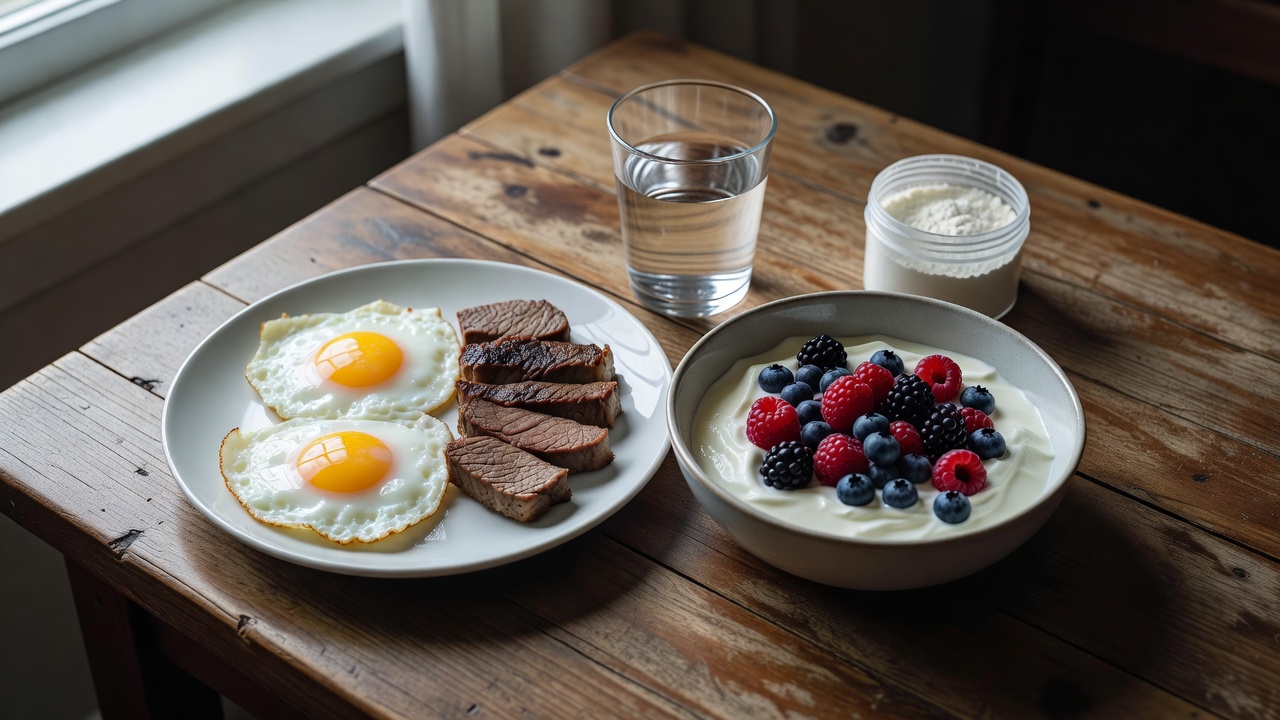
X spent the week talking past itself: one camp says the body can use far more than 30 g of protein in a sitting, the other camp says most men over 40 never even hit 30 g until dinner. Both can be true. The default this page argues is not a science-twitter ceiling. It is a floor. After 40, every meal gets 30 g of protein or it does not count as a protein meal.
Not medical advice
This is a practical default for food logging and meal construction, not a diagnosis or a diet prescription. Kidney disease, unexplained weight loss, and GI problems belong with a clinician, not a trending thread.
What X is actually arguing
The loudest nutrition fight this week is not “protein vs keto.” It is whether 30 g per meal is a myth cap or a missing trigger. The Washington Post amplified the first camp: if there is an upper limit on how much protein a meal can use for muscle, researchers have not found it, and it is certainly far more than 30 grams.[1] That post traveled because it kills a gym-bro line people have repeated for twenty years: “anything over 30 g is wasted.”
The second camp, which is louder among men over 40 and coaches who actually feed them, is not defending that cap. They are defending a threshold. Anabolic resistance means the same plate that built muscle at 25 barely registers at 50. European sarcopenia guidance cited in the week’s most-shared thread sits at 1.0–1.2 g of protein per kilogram per day for healthy older adults, and higher if you are ill or recovering. The old 0.8 g/kg RDA was built on young adults. Distribution matters as much as the daily total: 25–30 g per meal turns muscle protein synthesis on more reliably than dumping the same grams into one steak at 8 p.m. A protein-heavy dinner with a carb breakfast is the worst pattern, and it is the pattern most adults still run.[2]
A third, more practical camp is just counting the plate. Two large eggs are 12–14 g. That is not a high-protein breakfast after 40. “I eat eggs” is not the same as “I ate enough.” Accounts aimed at men 40+ spent the week repeating one sentence: don’t just eat protein, eat enough.[3]
The tension is simple once you stop treating both claims as opposites. Absorption is not the bottleneck. The leucine/MPS trigger is. You can use more than 30 g. Most men over 40 still fail to reach 30 g at breakfast and lunch, then wonder why the dinner steak did not save their arms.
Protein without a load is the other split. One performance account put it bluntly: hitting the grams does not do the sets. Resistance training is what makes the amino acids worth the chew. High protein around 1.6 g/kg helped some in older-men data; stacking powder on a life with no bar did not.[4]
Why this lands after 40
Muscle after 40 is less greedy. The same 15–20 g that used to flip the switch does not clear it. Leucine is the amino acid that trips muscle protein synthesis. Past 40, that tripwire sits higher. Fifteen grams at breakfast is a common “healthy” start and it does not clear the threshold. Thirty to 40 g per meal is the number showing up in clinic-adjacent posts this week for a reason.[5]
You also digest and use protein less efficiently. Appetite drifts toward toast, fruit, coffee, and whatever is fastest at lunch. Total intake falls into the 60–70 g range for a lot of adults over 50 while the muscle-maintenance number for a 70 kg man is already around 84 g on the conservative sarcopenia numbers, and higher if you lift or you are in a deficit. That gap is not a dramatic crash. It is a few hundred grams of muscle a year until the belt notch and the stairs tell on you.[2]
Insulin resistance makes the same meal weaker. Insulin’s job in muscle is not only glucose. It also tells tissue to stop chewing its own amino acids. When that anabolic side of insulin is dull, a meal that should leave you in net plus does so more weakly, even if fasting glucose still looks “fine.” Cutting calories without a protein floor and a lift is how men get lighter and softer at the same time.[6]
Sedentary older muscle needs more protein, not less, for the same synthesis response. Training unlocks efficiency. That is why “eat 30 g and walk” is incomplete, and why “lift and skip breakfast” is also incomplete. The meal is the raw material. The load is the instruction.
The default, in enough detail to actually do it
Floor, not ceiling: 30 g of protein at each of three meals. If you lift and you weigh 180–220 lb, treat 140–180 g per day as the working range, which is 35–45 g at three meals plus one 25–30 g add-on on training days. Do not chase 250 g. Do not celebrate 18 g of eggs and call it done.
Hit the first meal. That is the failure point. Coffee is not breakfast. Two eggs are not 30 g. Fix this one plate for seven days before you redesign the rest of your diet.
Build 30 g without a spreadsheet:
- 5 oz cooked chicken or turkey breast: ~35 g
- 6 oz 90–93% ground beef: ~40 g
- 5 oz salmon or white fish: ~28–32 g
- 8 oz 2% Greek yogurt: ~20 g (add eggs, whey, or meat)
- 1 cup low-fat cottage cheese: ~25 g
- 4 large eggs: ~24 g (add 3 oz leftover meat, ¾ cup Greek yogurt, or a scoop of whey)
- 1 scoop whey in water or milk: ~24–30 g
- 6 oz extra-firm tofu: ~20 g (you will need a second source)
Breakfast templates that actually clear 30 g:
- Three eggs scrambled with 4 oz leftover chicken or turkey, salt, spinach. ~40 g.
- 1 cup cottage cheese, 1 scoop whey stirred in or on the side, berries if you want them. ~45 g.
- 8 oz Greek yogurt, 1 scoop whey, 1 tbsp peanut butter. ~40 g.
- If you skip a sit-down breakfast: 1 scoop whey and 3 leftover meatballs or a tin of tuna on the way out. Still count it.
Lunch and dinner: a palm-and-a-half of meat, fish, or Greek dairy first. Then vegetables. Then starch if you train or you are not in a cut. Lead with the protein. Do not “save room” for it.
A day that hits the floor for a 200 lb man who lifts three days a week:
- 7:00: 3 eggs + 5 oz Greek yogurt + coffee. ~35 g
- 12:30: 7 oz chicken, vegetables, rice if you trained. ~45 g
- 16:00 (training day only): whey in water. ~25 g
- 19:00: 8 oz 93% beef or a large piece of fish, potatoes or not. ~45–50 g
That is ~150 g without living in a shaker bottle.
If you eat two meals, each meal needs ~50–60 g. Intermittent fasting does not cancel the threshold. It just means the first plate has to be bigger.
Shopping default for one man for a week: 3 lb chicken thighs or breasts, 2 lb ground beef, 2 lb fish or a rotisserie backup, 2 dozen eggs, 32 oz Greek yogurt or cottage cheese, one tub of whey for the gaps. Cook a tray of meat on Sunday. Cold protein in the fridge is how lunch stops being a sandwich and a hope.
Log three weekdays. You are not becoming a tracker person. You are finding out that your “high protein” breakfast was 16 g. Then stop logging and keep the plate.
Lift two or three days. Protein is not a spell. Squats, hinges, presses, rows. The meal feeds the work.
What people get wrong
Two eggs as a protein meal. They are a start. After 40 they are half a trigger unless you add yogurt, meat, or a scoop. This was posted on repeat for a reason.[3]
Treating 30 g as the most you can use. That cap is the line people are calling fake this week. You can use more. The problem in this audience is undershooting at two meals, not overshooting at one.[7]
Putting almost all the protein at dinner. 8 g at breakfast, 15 g at lunch, 50 g at 8 p.m. does not average out after 40. Synthesis is meal-by-meal. Dinner cannot retroactively clock the morning.
Calling a shake a training program. Powder fills a gap. It does not load the muscle. If the only stress in your week is a blender, the grams will not make you less soft.[4]
Assuming plant plates hit the same trigger at the same grams. You can do it. You usually need more total protein and a mix of sources to get the leucine. Beans and toast is still a carb meal with a protein rumor.
Using coffee, fasting, or “I’ll eat later” as the first meal. The first feeding sets hunger and the first MPS pulse. Later is how 10 p.m. snacking shows up.
This week
- Write down yesterday’s three meals and guess the protein. Then look up the actual grams for the main item only. If breakfast was under 25 g, that is the only thing you change for seven days.
- Pick one breakfast that is 30 g without thinking: eggs plus yogurt, cottage cheese plus whey, or leftover meat plus eggs. Eat it every morning this week.
- Cook 2 lb of chicken or beef on day one. Pack lunch from that, not from the office tray.
- On the two days you lift, put 30 g in the meal before or after the session. Do not skip the meal because you “had a shake.”
- Weigh one protein portion once so your eyes relearn what 5–7 oz cooked looks like. Then put the scale away.
- If a meal is toast, fruit, or a salad with 8 g of chicken on top, add a can of tuna, a cup of Greek yogurt, or a scoop. Do not negotiate with the original plate.
Read next
Nutrition: - Protein - How to eat - Alcohol and weight
Training: - Strength - Walking - Joints
Health: - Sleep - Bloodwork - Recovery
Back to Trending on X.