Protein at every meal
Archived — September 1, 2026
Snapshot of Trending on X that day. Current · All snapshots
Updated September 1, 2026. Trending in Nutrition on X.
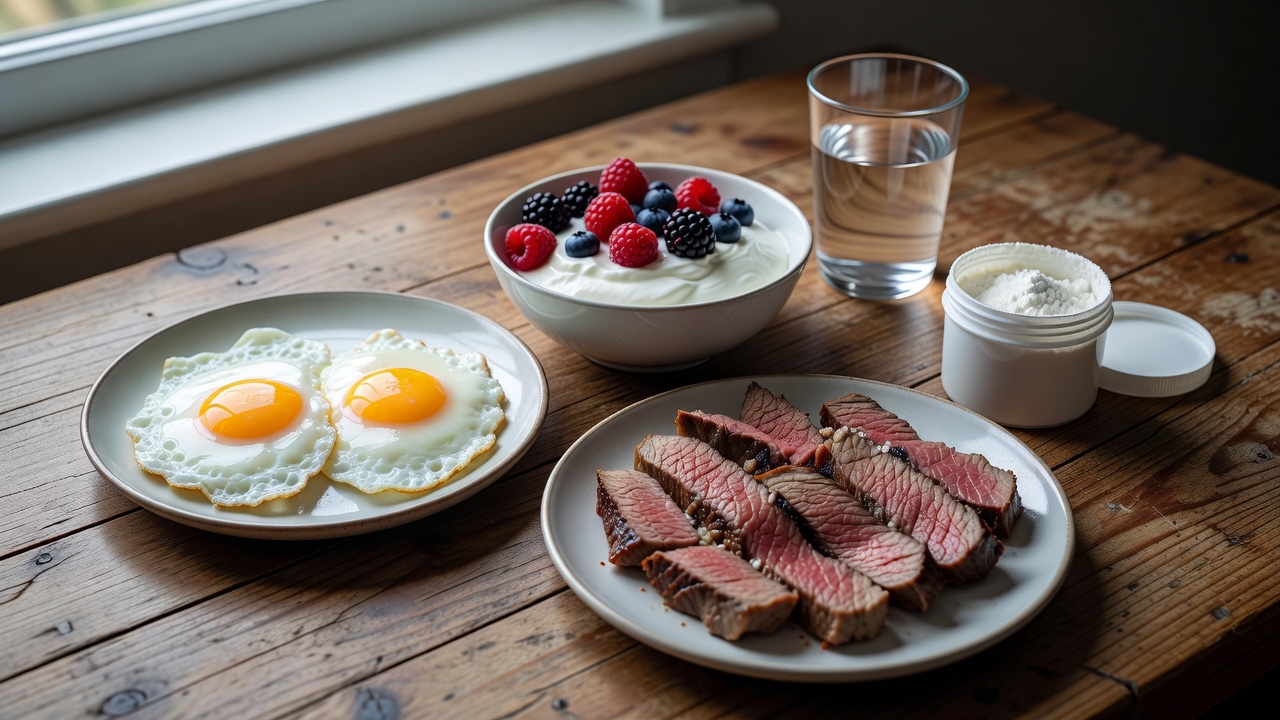
X this week is not fighting over keto versus vegan. It is fighting over breakfast. One camp still starts the day on coffee, toast, or a fast until noon, then dumps most of the protein at dinner. The louder camp is posting grocery lists and meal-prep photos with the same rule: a real protein source at every meal, 30 to 50 grams, starting in the morning. This article takes that second default and makes it something you can run for the next seven days.
Not medical advice
This is a food default for generally healthy men, not a prescription. If you have kidney disease or a clinician has you on a protein limit, use their numbers, not a thread.
What X is actually arguing
The repeated line this week is blunt: men over 40 are under-eating protein without noticing, then blaming hunger, cravings, and “slow metabolism” for the muscle they keep losing. The fix being sold is not a new diet. It is a plate rule. Put a proper protein source in each meal and stop hoping the day adds up by accident.[1]
The high-protein coaches are using almost identical math. Roughly a gram of protein per pound of goal bodyweight, split into 40 to 50 grams a meal, from food you can see: chicken, lean beef, eggs, Greek yogurt, cottage cheese, fish, whey. That is the number showing up in fat-loss threads, grocery threads, and “next 60 days” lists. The claim attached to it is practical, not mystical: it keeps you full, it protects muscle in a deficit, and it is what killed the hunger that ended the last attempt.[2]
A second camp is arguing the clock, not just the total. The typical pattern they keep naming is cereal or toast in the morning (maybe 10 grams), a sandwich at lunch (around 20), and half the day’s protein at dinner. Same daily total, worse result. The post that got traction on this point said even distribution across three meals beat a dinner dump on the muscle-building signal, and that aging muscle needs a larger dose in the same sitting to flip the switch. Their practical number is lower than the 1-gram-per-pound crowd: about 30 grams per sitting if you weigh 80 kilos, with eggs and yogurt before noon. They also said the quiet part: protein without lifting did not add muscle in older men. Both. Not one.[3]
Breakfast is the actual fight. One side posts 4 to 6 eggs, yogurt bowls, and “40 grams before 9am or the 3pm crash is the bill.” The other side still treats skipping breakfast as discipline. Office culture still lectures the guy eating chicken at noon. That tension is loud because both groups think they are the serious ones. For a man over 40 trying to hold muscle, skipping the morning meal is not a productivity hack. It is usually just a 10-gram breakfast wearing a fasting costume.[4]
The viral posts are not essays. They are shopping lists and four-meal templates: 150 to 200 grams of protein a day, under an hour of cooking a week, eggs and fruit in the morning, a yogurt-and-whey snack, a fattier protein at lunch, a leaner one at dinner. That is what is actually circulating, not another food-pyramid lecture.[5]
Why this lands after 40
Muscle after 40 is less interested in a polite snack. The same 20-gram lunch that “counted” at 25 does not reliably turn on muscle protein synthesis now. That is anabolic resistance in plain language: aging muscle is less sensitive to the same dose, so the per-meal target has to move up, and the amino acids that matter most come from leucine-rich food — eggs, dairy, meat, fish — not a dusting of nuts on oatmeal.[6]
You are also already losing the tissue that sets your metabolism, your joints, and whether you can still get off the floor. After 40, the job is not “get shredded.” The job is keep the muscle you have while the scale moves, because a smaller number made of lost lean mass is just a weaker man in a lighter shirt. That is why the 40-plus accounts keep pairing protein with lifting and why they keep saying the scale is the wrong trophy.[7]
Hunger is the other mechanism. Low protein at breakfast is how you arrive at 2pm empty, raid whatever is in the office, and then eat a huge dinner that still does not fix the morning hole. Protein is the most filling macronutrient per calorie for most people. If every meal has a real source, the evening binge has less room to start. That is why the “protein at every meal” posts keep talking about hunger ending the last diet, not about a new supplement stack.[8]
Distribution matters because you do not store a breakfast miss and cash it in at 8pm at full value. Older muscle wants a threshold dose several times a day. One steak at night after two carb-heavy meals is the pattern most men over 40 already have. It feels like they “eat a lot of protein.” They eat a lot of dinner.
The default, in enough detail to actually do it
Floor, not a fantasy. Use goal bodyweight if you have a lot of fat to lose; use current weight if you are already close.
- Daily protein: 1.6 grams per kilogram as the floor (about 0.7 grams per pound). 2.2 grams per kilogram (about 1 gram per pound of goal weight) is the number X is repeating this week. For a man aiming at 180 pounds, that is roughly 130 grams at the floor and 180 grams at the loud target.
- Per meal: 30 to 45 grams, three times. If you miss, add a 20 to 30 gram snack. Do not try to “make it up” with a 90-gram dinner.
- First meal: 30 to 40 grams within a couple of hours of waking, or as the first meal if you truly prefer a later start. Coffee is not a meal.
Build every plate in this order: protein, then plants, then starch, then fat. If the protein is not sitting there as a piece of meat, a bowl of yogurt, a tin of fish, eggs, or a measured scoop, it does not count.
Breakfast (30–45 g). Pick one and repeat it.
- 3 whole eggs + 4 egg whites, spinach, mushrooms. About 40 grams. Two eggs alone are only about 12 grams. That is a garnish, not a meal. Add whites or a side of yogurt.[9]
- 245 g non-fat Greek yogurt + 1 scoop whey + berries. About 45 grams, no pan required.
- Cottage cheese (2 cups) and fruit, or overnight oats built around whey, not around oats.
Cook once: muffin-tin egg bake or a dozen boiled eggs on Sunday. That is the whole “busy man” problem solved for five mornings.
Lunch (40–50 g). This is the meal you meal-prep or you will buy a sandwich.
- 6–8 oz cooked chicken, turkey, or lean beef (a cooked palm-and-a-half) + rice or potato + a pile of vegetables.
- Slow-cooker chuck roast or a 2 lb pan of lean ground beef on Sunday. Four servings, 40-plus grams each, salt and pepper, freeze half.[5]
Dinner (40–50 g). Leaner if lunch was fattier.
- Salmon, white fish, or shrimp, 15 minutes in the oven or pan, lemon, seasoning.
- Shredded chicken in salsa or a lean beef patty, potato, mixed vegetables.
- Same protein as lunch is fine. Variety is optional. Hitting the number is not.
If you are short (20–30 g). Greek yogurt, cottage cheese, a whey shake, or two more eggs. Rice cakes with peanut butter are a carb-fat snack. They are not the protein.
Grocery default for the week. Chicken breast or thighs, lean ground beef or turkey, salmon or shrimp, eggs, Greek yogurt, cottage cheese, whey. Rice, potatoes, oats. Spinach, broccoli, frozen mixed vegetables. Olive oil, salt, one sauce you actually like. That list is what the high-engagement grocery posts are circulating because it removes decisions.[10]
How to hit it without weighing every gram after day three. Learn three visual anchors: a cooked chicken breast the size of your palm is ~30–35 g; a 200 g tub of 0% Greek yogurt is ~20 g; one scoop of whey is ~20–25 g. Stack two anchors and you are in the 40s. Log three days in any tracker so the guesses get honest, then run the same meals.
Training sits next to the plate. Protein at every meal without a lifting habit is an expensive way to stay the same. Two to four strength sessions a week is the pair. Walking covers the rest of the movement. Do not add a 14-day cleanse. Add the missing breakfast.
Carbs stay. You do not have to delete rice and potatoes to make this work. Protein first, then eat the carbs you can still move on. Extreme cuts are how men over 40 last nine days.[11]
What people get wrong
Two eggs and a prayer. A three-egg omelette looks like a protein breakfast and often lands under 20 grams. If breakfast is one of three chances to hit the threshold, round the meal out. Whites, yogurt, or leftover meat. Not another piece of toast.[9]
Dinner heroics. Eating 80 grams at 8pm after two weak meals does not erase the morning miss. The even-spread argument this week exists because that is how most men already eat.
Counting “high protein” foods that are mostly fat. Peanut butter, cheese, almonds, and a handful of seeds are not a 40-gram protein source unless you eat a comical amount of calories with them. Meat, eggs, dairy, fish, whey. Then fats on purpose.
Treating the RDA like a training diet. 0.8 g/kg is a sedentary minimum for nitrogen balance, not a plan for a 45-year-old trying not to shrink. The 40-plus threads are loud because people are still using a number that assumes you do not lift and do not mind losing muscle.
Protein without the barbell. Raising protein and skipping resistance work is the other miss named this week. The studies people quoted did not hand out muscle for eating more chicken on the couch. Lift. Then feed the lift.[3]
Hoping it happens. “I eat pretty good” is how you stay at 90 grams a day. Anchor 40 grams to breakfast, lunch, and dinner. If a meal has no obvious animal protein, yogurt, or whey, it is not done.
This week
- Write your three default meals on a card: breakfast 40 g, lunch 40 g, dinner 40 g. Same meals Monday to Friday. No new recipes.
- Shop once from the list above. If it is not protein, vegetables, or a starch you already eat, leave it on the shelf.
- Prep one protein in bulk on Sunday: egg bake or boiled eggs, plus a tray or pot of chicken, beef, or turkey. That covers the two meals you currently fail.
- Log protein only for three days. Ignore everything else. If a day lands under 120 g, the miss is almost always breakfast or lunch.
- Lift twice in the next seven days. Full-body or upper/lower. Protein has somewhere to go.
- If you like fasting, keep the window, but make the first meal 40 grams. Do not run coffee until 2pm and call it a protocol.
Read next
Back to Trending on X.