Protein first, drinks last
Archived — September 25, 2026
Snapshot of Trending on X that day. Current · All snapshots
Updated September 25, 2026. Trending in Nutrition on X.
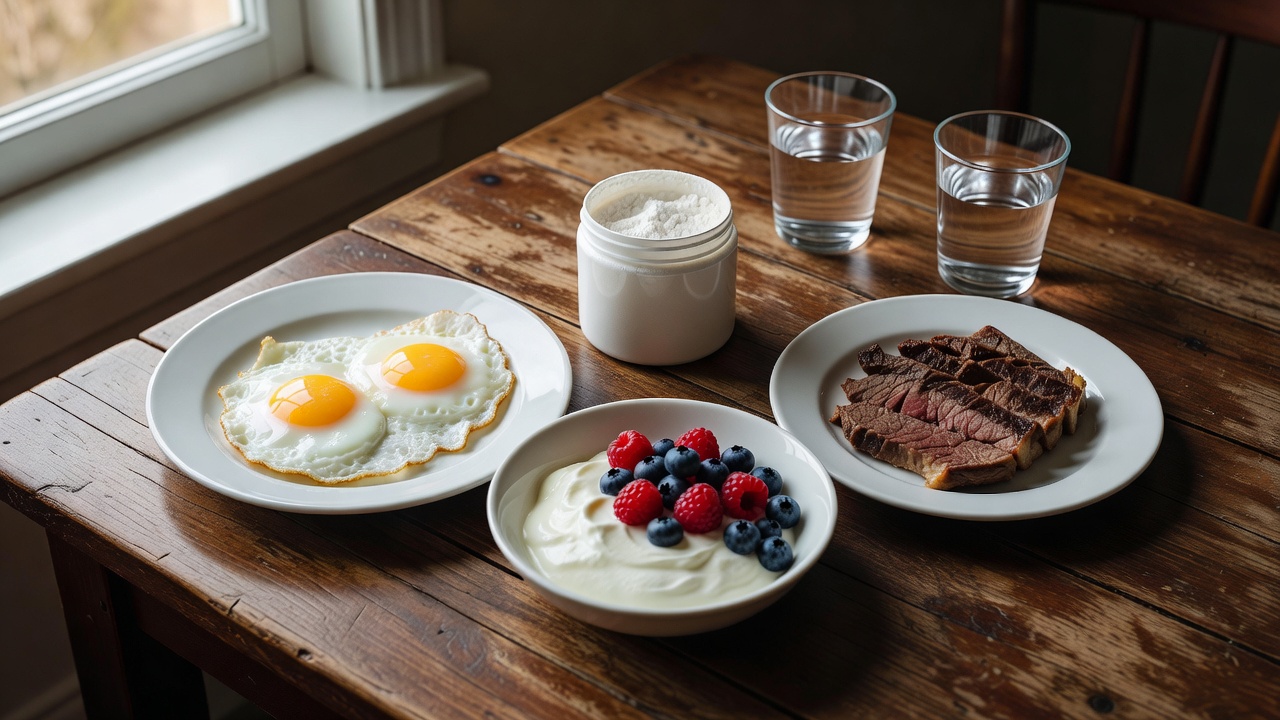
This week’s nutrition fight on X is not whether protein matters. It is order of operations. Men over 40 are logging chicken, hitting a daily gram target, then pouring beer or whiskey on top of it and wondering why the waist and the lifts do not move. The default here is simple: solve protein at every meal before anything else hits the table. Alcohol and other drinks wait. Most nights they do not happen.
Not medical advice
This is a practical eating default for men over 40, not a diagnosis, a drinking-cessation program, or a clinic protocol. If you have a medical condition, take medication, or have a problem with alcohol, talk to a clinician who knows your labs.
What X is actually arguing
Three camps are loud, and they overlap more than the quote-tweet wars suggest.
The first camp is meal architecture. Protein is not a daily spreadsheet you rescue at 9 p.m. It is the first thing you put on the plate, every time you eat. One widely circulated thread this week told a 250 lb guy aiming for ~210 to hit 150–180 g a day by making protein the first problem at each meal — 4 × 40 g or 5 × 30–35 g — instead of chasing grams all afternoon.[1] Another post, aimed at men past 50 but circulating in the over-40 feed, said the muscle does not count a daily total. It counts leucine dose per sitting. Two eggs and turkey bacon land around 19 g. That is not a protein-first breakfast. It is a wasted window.[2]
The second camp is the undo button. Coaches keep repeating the same scene: the guy trains, hits protein, then drinks most nights and acts confused when strength stalls. The mechanism they cite is not moral. Alcohol suppresses muscle protein synthesis, blunts insulin and IGF-related signaling in muscle, and the bill shows up as a soft midsection, flat mornings, and lifts that do not move. The ask is a 14-day cut, protein and lifting held constant, then look at sleep and next-day energy.[3] A parallel post this week listed the same stack: MPS down for up to 24 hours, sleep architecture wrecked, 7 calories per gram with no protein, and the worst window is the night before a heavy session or right after training.[4]
The third camp is the replacement pour. The loudest protein object on the platform this week was not a steak photo. It was a filtered-milk chocolate shake breakdown that cleared a million views: 26 g of protein from ultrafiltered milk, not a scoop of mystery powder.[5] A pint with 40 g of protein for 350 calories made the same round.[6] That is the other meaning of “drinks last.” If a drink is going in, make it the one that finishes the protein target, not the one that pauses fat oxidation and wrecks sleep.
The tension is sequence, not purity. Almost nobody serious is preaching lifetime abstinence as the only identity. The split is whether you treat the nightly pour as a right you earned by lifting, or as the last optional item after the protein is already in.
Why this lands after 40
After 40, two things change at the same time, and they stack.
Muscle gets picky. Anabolic resistance means a 20 g “protein” breakfast that worked at 28 does not flip the switch at 45. Posts this week put the useful per-meal dose in the 25–40 g range, with the higher end more honest if the protein is mixed and you are trying to hold lean mass in a deficit. Load it all at dinner and you leave two or three building windows on the floor.[7] That is why “I eat plenty of protein” and “I am still getting softer” can both be true.
Alcohol gets meaner for the same reason lean mass is slipping. Alcohol dissolves in water, not fat. As muscle (and the water in it) drops and fat rises, the same two drinks reach a higher peak concentration. Keep the muscle up or the old “I used to handle it fine” story stops being true.[8] On top of that, the body treats alcohol as a priority toxin. Fat oxidation pauses while it clears. Heavy drinking blunts MPS even when you already ate enough protein. Sleep — the actual recovery drug — loses slow-wave and REM. You paid for the gym session twice and collected once.[9]
The beer-belly story is also dumber than “empty calories.” One post this week pointed at Oxford Biobank DXA data: higher alcohol stayed linked to more visceral fat even after total body fat was accounted for, with the pattern in men showing up above roughly 17 units a week. Friday night is not only adding energy. It is parking fat in the compartment that drives the tired, inflamed, belt-notch look.[10]
So the order is not a Twitter aesthetic. Protein first protects the tissue you are trying to keep. Drinks last — or not at all — stops you from paying a 24-hour tax on that tissue.
The default, in enough detail to actually do it
Pick a protein number and stop negotiating it. Use 0.8–1.0 g per pound of the bodyweight you actually want, not the weight on a hopeful morning. A guy aiming 180–200 lb is in the 144–200 g band; most men over 40 who lift and sit at a desk land well by locking 160–180 g and repeating it.[11] If you hate scales, a crude floor that showed up all week is “about your goal weight in grams.” Hit it with food first. Powder is a patch, not the plan.[12]
Split it so each eating window clears ~35–45 g of actual protein. Three meals work. Four is easier if breakfast has been toast and coffee for a decade.
Protein first means the animal (or dairy) hits the plate and gets eaten before the bun, the chips, the wine, or the “I’ll just have a beer while I cook.” You do not start the meal with a drink. You do not sip 400 liquid calories and then discover you have no appetite for the chicken.
A boring template that matches what people actually posted this week:
- Breakfast: 4 eggs plus 1 cup cottage cheese (~50 g). Not two eggs and a slice of bacon. If you will not cook, a 30–40 g shake plus Greek yogurt still beats the 19 g “high protein” diner plate.[13]
- Lunch: 8 oz chicken thighs or a rotisserie breast, rice or potatoes, frozen vegetables (~50–55 g).
- Dinner: 6–8 oz 93/7 beef, salmon, or extra chicken, potatoes or rice, salad kit (~40–50 g).
- Gap meal if you miss: canned tuna, Greek yogurt, leftover meat, or a 26–40 g ready-to-drink shake. Keep one in the fridge on purpose.
Grocery default, one trip: two rotisserie chickens, 18 eggs, large cottage cheese, plain Greek yogurt, a family pack of chicken thighs, a couple pounds of 93/7, canned tuna, frozen broccoli, potatoes, whey or a filtered-milk shake, sparkling water. That covers the week. You are not hunting 40 g at 8:47 p.m. in a gas station.
Drinks, in order:
- Water. A useful floor from this week’s cut-fat checklists is about half your bodyweight in ounces, most of it plain or fizzy with no sugar.[14]
- Coffee or tea if you already tolerate it. Do not let it replace breakfast protein.
- A protein drink only when a meal would otherwise miss 35 g.
- Alcohol last, and not as a daily habit. Default is zero Sunday through Thursday. If you drink Friday or Saturday, eat the protein first, then decide. Cap it at one or two. Do not drink the night before a lower-body or heavy press day. Do not drink right after training. That is the window the MPS posts keep flagging.[4]
Social nights do not need a spreadsheet. They need a rule: protein and vegetables on the plate, one higher-calorie item you actually like, sleep and water non-negotiable. That “two-window” setup — train window vs social window — showed up this week as the way to stop Saturday from deleting Sunday.[15] You still eat the steak before the second pour.
If you want the honest test the coaches keep assigning: 14 days. Same protein. Same lifting. Alcohol cut hard or to zero. Watch morning energy, sleep, and waist, not just the scale. Most men already know the answer before day 14.[3]
Whole-food sources do the heavy lifting: eggs, Greek yogurt, cottage cheese, chicken, lean beef, fish, tuna, shrimp. Bars, shakes, and deli meat fill holes. They should not be 80% of the grams.[16]
What people get wrong
Calling two eggs a protein-first breakfast. It is half a dose. You feel virtuous and you built nothing. Fix breakfast or stop pretending the daily total is doing the work.[2]
Dumping 80 g at dinner and grazing 15 g the rest of the day. After 40 that is one stimulus, not three.
Hitting the protein target, then treating three beers as a separate hobby. The pour is not separate. It is in the same 24-hour recovery budget. MPS does not care that you “earned it.”[9]
Starting the meal with a drink so appetite for the protein dies. Sequence is the whole article. Food first. Glass later, if at all.
Reading beer belly as only extra calories. Visceral fat can move even when total fat is accounted for. The midsection is data, not a personality.[10]
Swapping beer for juice, smoothies, or “healthy” calories in a bottle and calling it discipline. Liquid sugar is still a drink ahead of protein. One “stop drinking this after 40” juice piece even made the timeline this week. The principle is the same: if it does not help the gram target, it waits.
Using a $55 tub of powder as cover while dinner is takeout and four nights of drinking. Powder is S-tier convenience when food is impractical. It is not a personality, and it does not offset the pour.[17]
Letting Saturday night wreck Sunday training, then spending Monday inventing a new macro split. The week is lost in the hangover, the late food, and the skipped session, not in whether lunch was 37 g or 41 g.[15]
This week
- Write one number on a card: grams of protein per day, 0.8–1.0 × the weight you want. Put it on the fridge.
- Rebuild breakfast to at least 35–40 g tomorrow. Eggs plus cottage cheese, or yogurt plus a shake. No more 19 g theater.
- For seven days, eat the protein on the plate before you touch alcohol, dessert, or a second starch.
- Alcohol at zero Sunday through Thursday. If you drink this weekend, it is after the protein, two-drink cap, not the night before a heavy session.
- Put one 25–40 g ready-to-drink protein in the fridge and one case of sparkling water where the beer used to live. That is the replacement pour.
- Measure waist and note sleep quality on Friday and next Friday. Hold lifting and protein steady so you can see what the drinks were doing.
Read next
Back to Trending on X.